

KCPT PRESSKIT
Carmelita
CARMELITA: A Vindication for the Unwritten: Or How to Write Yourself Back into History
How do you break free from an assigned narrative? Meet Carmelita Colòn, determined to do just that, challenging us to acquaint ourselves with assumed history and to reimagine what it means to reclaim our stories.
-
The story begins inside of a quiet museum while the AI audio guide known as the Voice of History shares a short history about the display’s subject, Carmelita Colon, a Mexican who migrated to Washington in 1860. Despite it being a display focused on her, little to no information is given on her history. Carmelita comes to life and demands the opportunity to fully share her story.
Carmelita begins her story in her childhood in Huasabas, Sonora. The youngest of four from a family of vaqueros, her knowledge and skills with horses and burros and love of reading, along with the Mexican-American War shape her destiny. In hope for her safety and possibility of a more peaceful life, she goes to live in the California gold rush town, Coloma with her brother and father. At twenty she meets her spouse, Sebastián Colon, from Barcelona Spain. They get married and seek their fortune in the Pacific Northwest, settling in Walla Walla, WA. For several years they run a mule train from Walla Walla to Idaho, carrying gold and goods back and forth. Once Carmelita is pregnant she can no longer participate in the mule train. She learns how to be on her own for the first. When times are difficult, Carmelita makes the traditional food her Abuela and Mother taught her (machaca, cocido, y tamales) to feed herself and earn a living.
Despite the first years of marriage being joyful and full of hope and adventures that include outlaws, shoot outs, and becoming parents, Carmelita and Sebastian’s marriage begins to fray. His lack of compassion to the news Carmelita receives regarding the Bacum massacre and his constant gambling, have Carmelita doubting herself. Throughout it all, she continues to make food to sell and feed hungry members of the Walla Walla community. She and Sebastian set up a food tent by the water, selling out of their food almost daily to the residents of Walla Walla, meeting the hunger of leisure and labor. One day, she meets two prominent Seattle women, Eliza Hurd and Sarah Yesler, and they inspire her to listen to Abigail Scott Duniway, a devoted and persistent suffragist from Oregon.
Despite Carmelita’s newly strengthened self-respect and celebration of ingenuity, her marriage continues to crumble. With the help of a Seattle lawyer, Carmelita is able to secure a divorce. She opens her own restaurant, along with community support. At last in charge of her own domain, in the evenings she turns her restaurant into a learning center for women. Ultimately, she shares that she wasn’t able to return to her pueblo, Huasabas, in Mexico until her seventies, prior to the start of the Mexican Revolutionary War. She challenges those who witness her story to take the lessons from her life and apply them to theirs, while finally coming to rest. The lights slowly fade as the Voice of History’s recording begins anew, this time with Carmelita’s story and now self-centralized in her own history. -
From Greg Heilman, Sound on Stage:
"Part fact, part fiction, part English, part Spanish, and entirely unique..."
"... the work that this actor [Antonieta Carpio] does with this piece is so impressive, the sheer amount of dialogue that she recites, not just as Carmelita, but as the many characters she portrays in the retelling of her memories, is stunning and it’s non stop for the two hours of the show, save for the 15-minute intermission."
"[Costumes] Designed by Corinne Adams, they work very well for each part of the story that she recounts, and for each stage of Carmelita’s life that Antonieta is portraying."
"Antonieta is excellent..."
"Carmelita proves that just because independent and strong immigrant women aren’t depicted to any extent in our history books, it doesn’t mean that they didn’t exist."
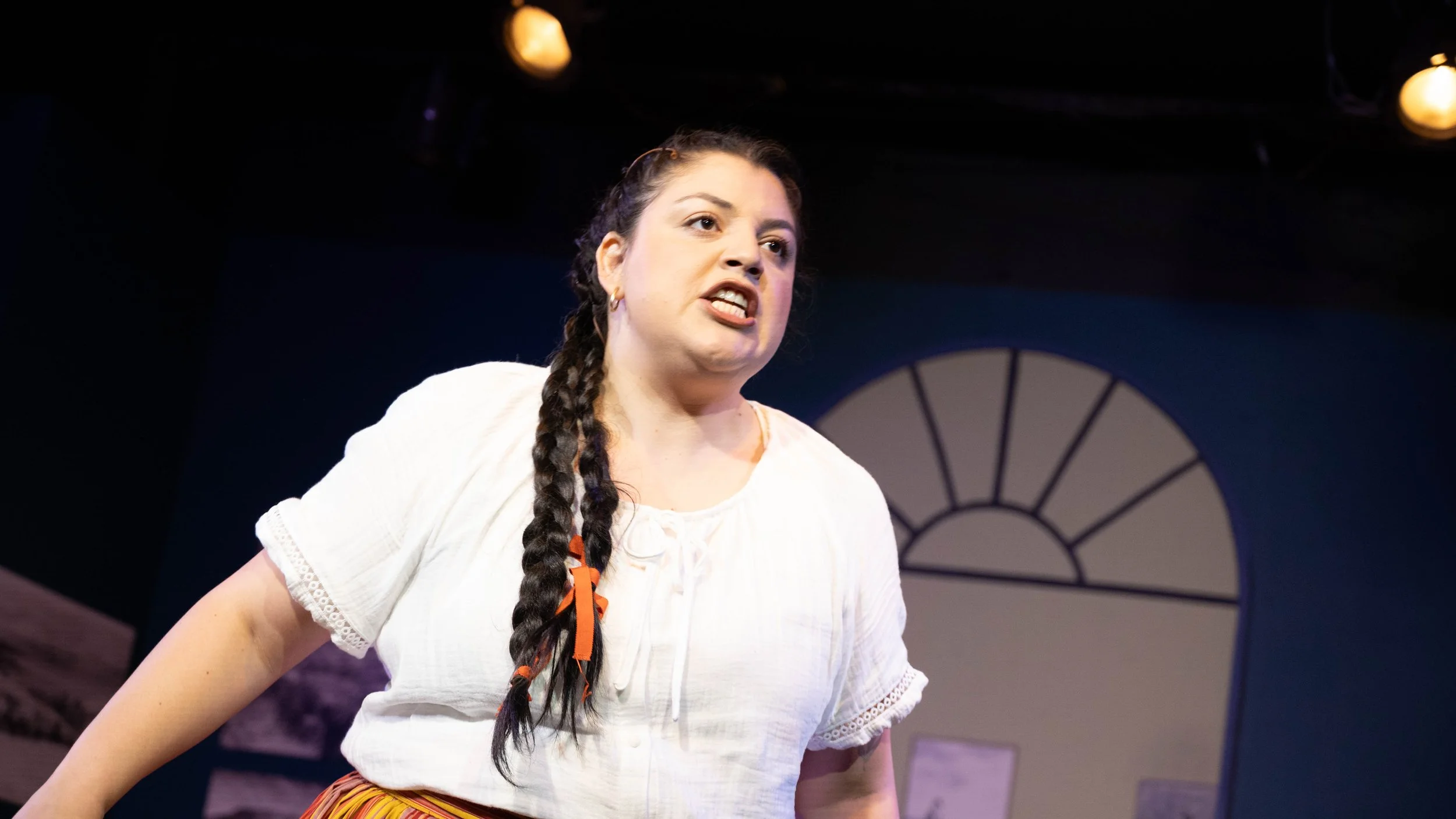
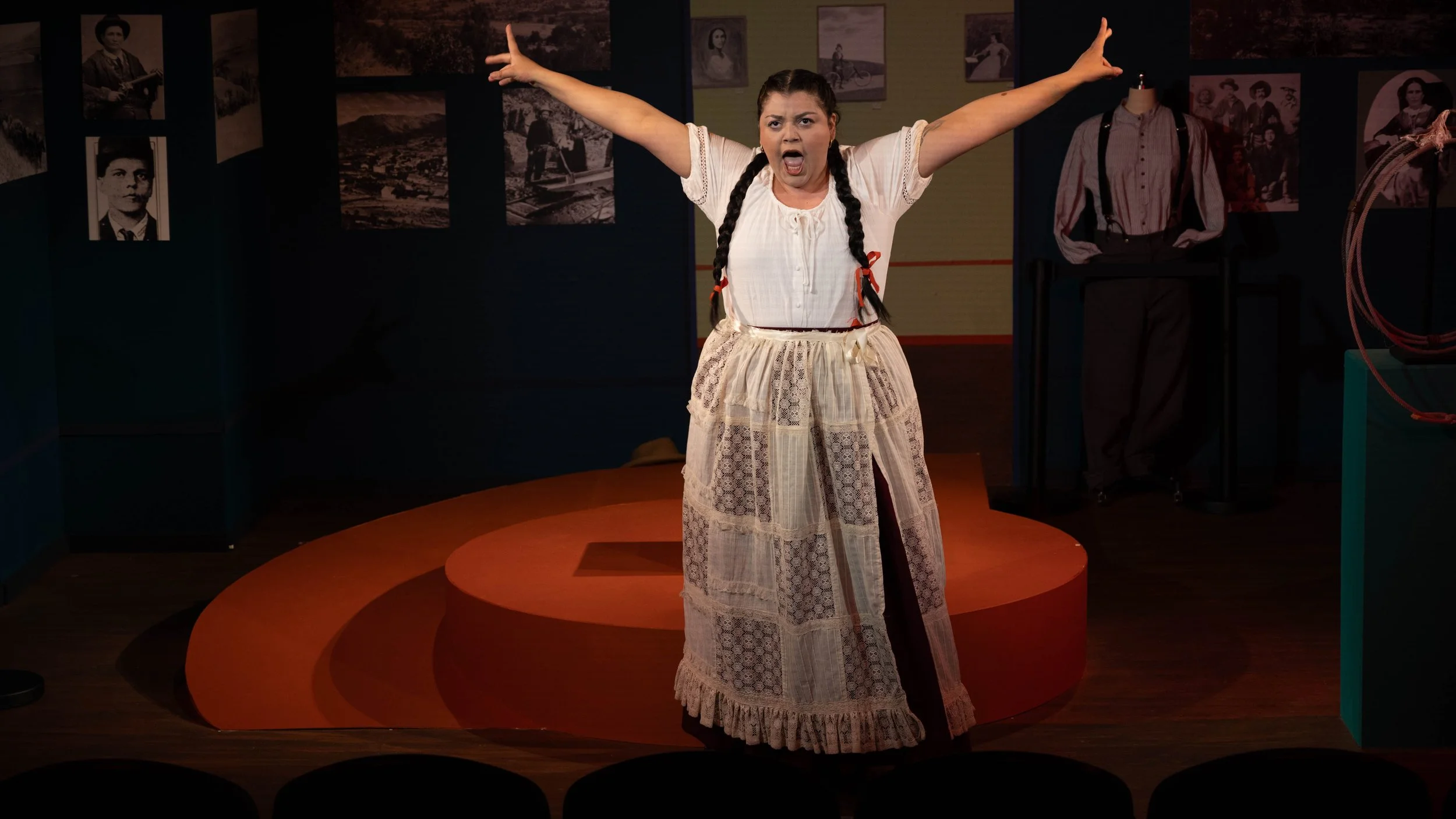
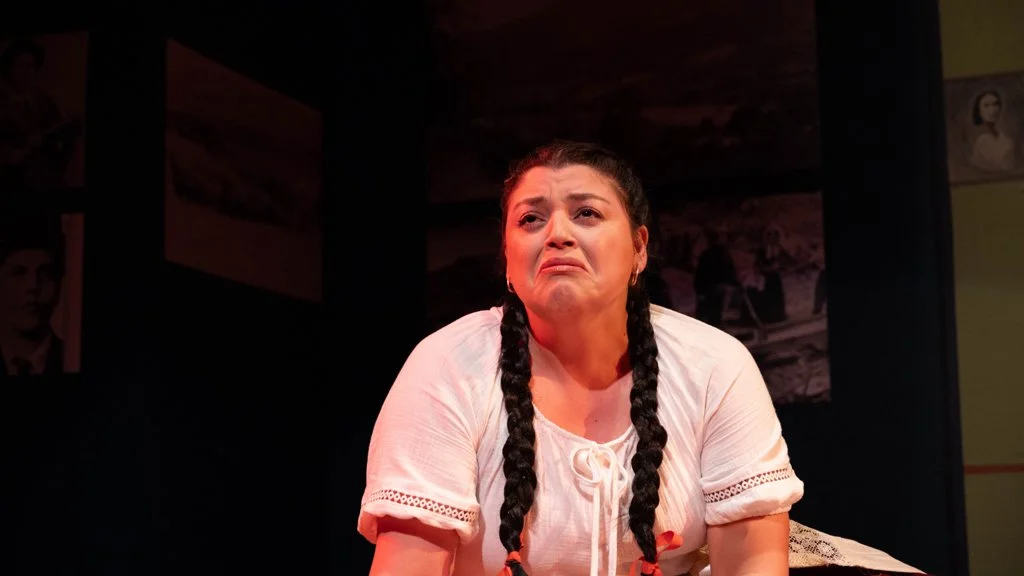
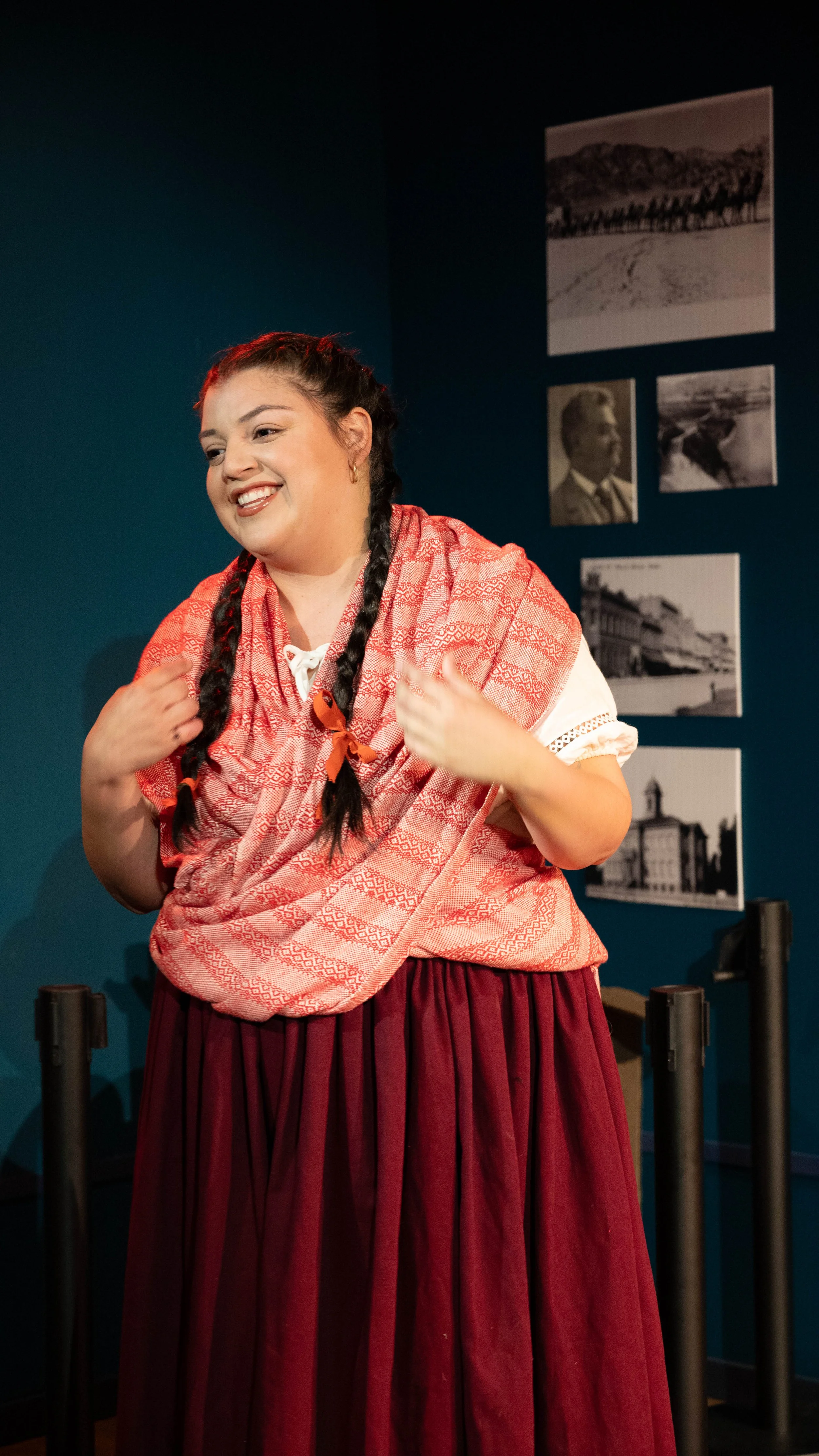
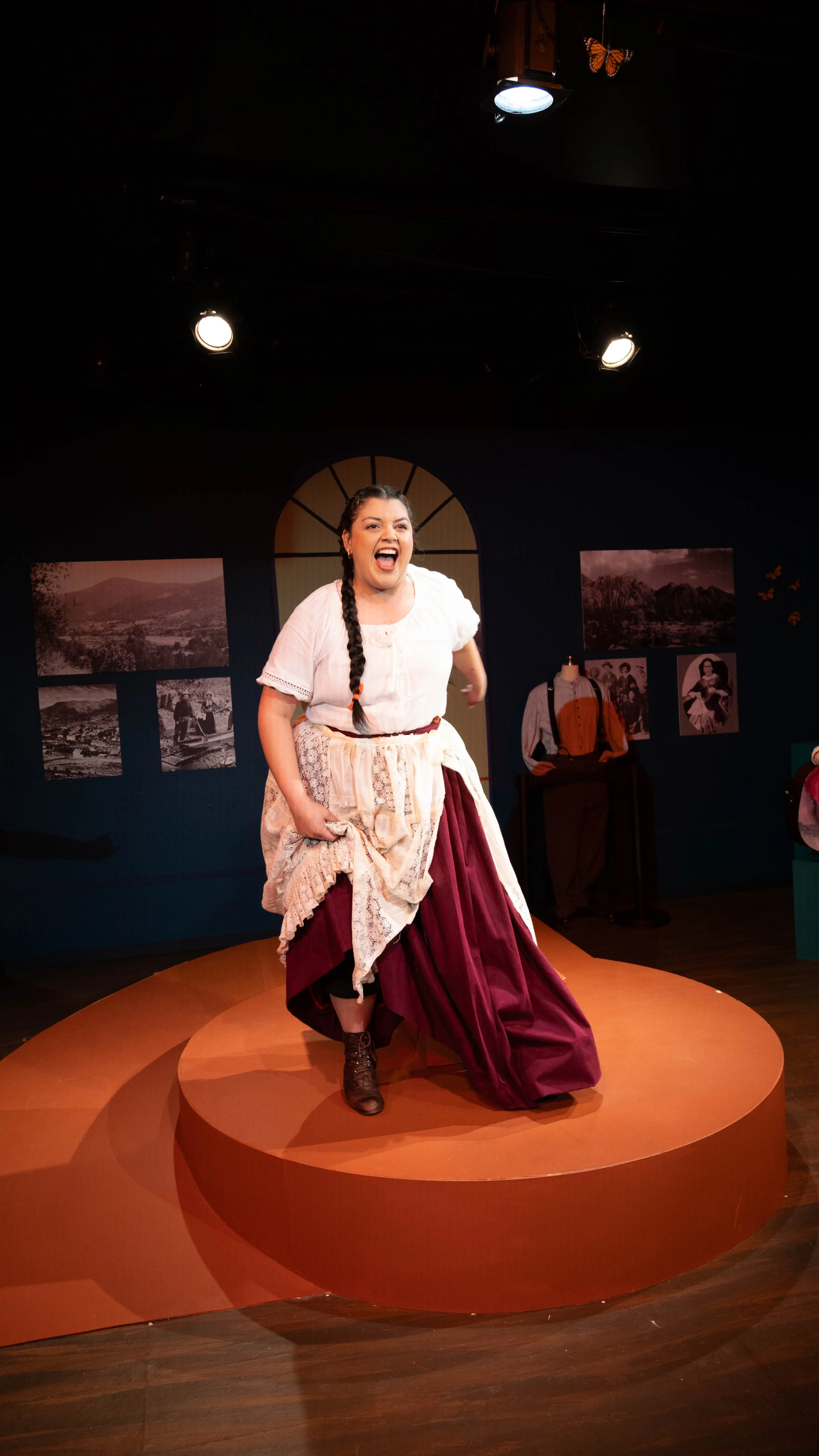
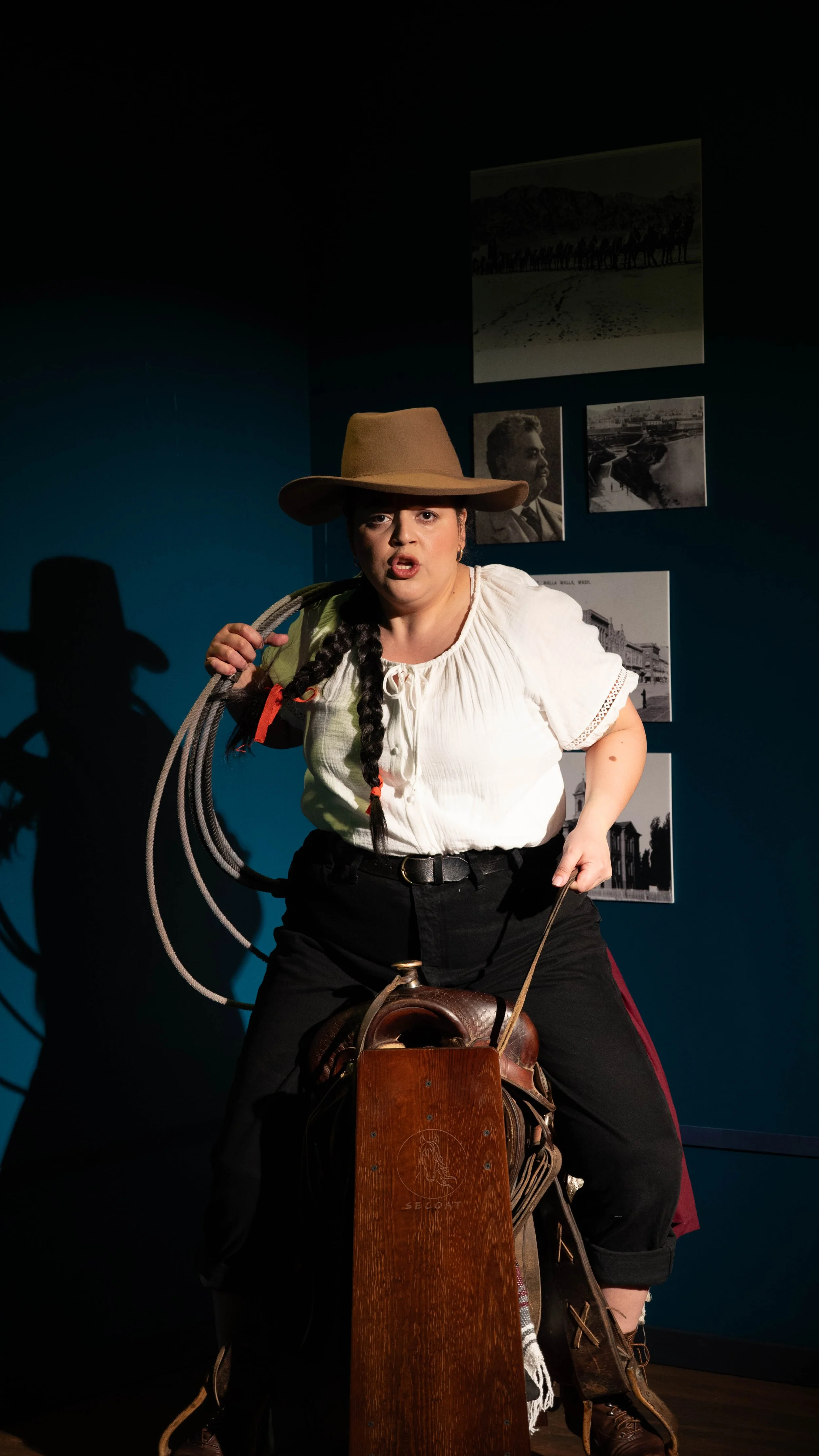
Pictured Above: Antonieta Carpio as Carmelita Colon, on stage at Key City Public Theatre in Port Townsend.
Images by Mel Carter, Key City Public Theatre, 2025

Antonieta Carpio, Featured Performer
Antonieta Carpio (Carmelita Colon) is a performer, musician, producer, designer, who continues to strive to provide spaces for Brown, Black and Queer inclusive narratives. Being part of so many stories in front and behind the table, she is grateful to be portraying courageous Carmelita who teaches us to move through the adventure. Thank you to Key City Public Theater and Ana Maria Campoy for the opportunity. Connect with Antonieta at esmeraldantonieta.com.

Ana Maria Campoy, Playwright
A Mexican American theatre artist, educator, and advocate, Ana Maria Campoy is based in Seattle and has worked at regional theaters throughout the U.S. as a writer, director, dramaturg, and actress. Ms. Campoy has adapted a number of classic and contemporary plays as Spanish/English productions performed nationally with bilingual BIPOC/PGM artists. Ms. Campoy currently is an Associate Artist with Seattle Shakespeare Theater where she advises on Community Engagement and EDI, participates in the SEE program, and is exploring the expansion of programming into other areas of WA State. Founder of the all-volunteer, mutual-aid collective, WashMasks, Campoy works with others to provide PPE, support, and advocacy for migrant and seasonal farm workers and their families in Washington state during COVID-19 pandemic.

Barbara CallandEr, historian
Barbara Callander, a Seattle-based humanities scholar and performing artist who has been researching and disseminating the history of women’s rights throughout the state of WA and the PNW for over 25 years in conjunction with the creation and presentation of lectures, dramatic biographical performances and other programs about suffrage in Washington, the Northwest, and beyond. Ms. Callander's numerous Humanities presentations over the last three decades have been awarded grants from Humanities Washington, the Washington State Historical Society and ArtsWA, among others.

Gabs Nathanson, Stage Manager/Performer
Gabs Nathanson is excited to be stage managing the Washington Women’s History Tour - Suffrage Series including CARMELITA and HER INK, HER VOICE. They’ve recently stage managed I LOVE YOU, I MISS YOU, I’M GLAD YOU’RE GONE and the full-length version of CARMELITA at Key City Public Theatre. They’ve also stage managed a touring program - kNOw MORE Human Trafficking Prevention and Awareness program using theater and improv to teach students. Gabs was also a stage manager and performer in burlesque shows at LoudFridge Theater Company.
Her Ink, Her Voice celebrates the extraordinary life of Susie Revels Cayton—journalist, editor, activist, mother, and visionary. Born in Mississippi in 1870, the same year her father became the first Black U.S. Senator, Susie brought her fierce intellect and courage to the Pacific Northwest at the turn of the 20th century. In an era when few Black women had access to platforms of influence, she became associate editor of The Seattle Republican, using her pen to challenge injustice, uplift women’s voices, and shape public discourse in a growing city.
Discover a story of grit, grace, and the enduring power of the written word—and learn about an overlooked pioneer whose legacy continues to inspire.
Her Ink, Her Voice
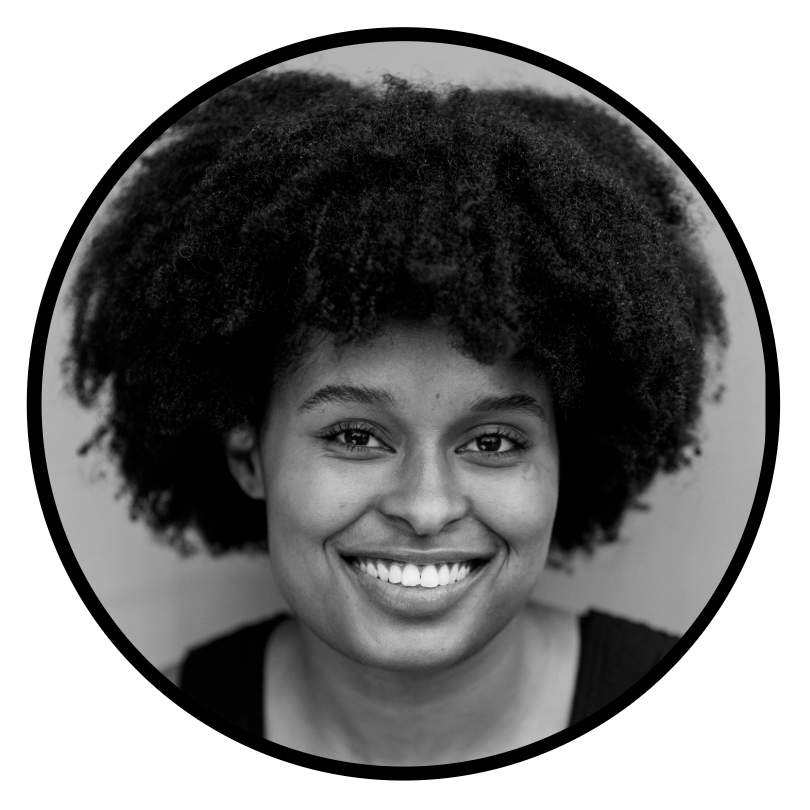
Taylor Freeman, Featured Performer
Taylor Freeman (she/he/they) is a queer multidisciplinary artist from north Texas, currently living in Seattle, WA. Taylor is a 2023 Honors graduate from the University of Washington, with a degree in Drama: Performance and International Studies. Their work and research focuses on storytelling as a site of healing. Her previous work includes puppets (Rey), The Wolves (11), Uncharted Waters: Twelfth Night (Antonia/Valentine), (Anon)ymous (Anon), Eurydice (Eurydice), and performing spoken word with Grammy nominated pianist Simone Dinnerstein.
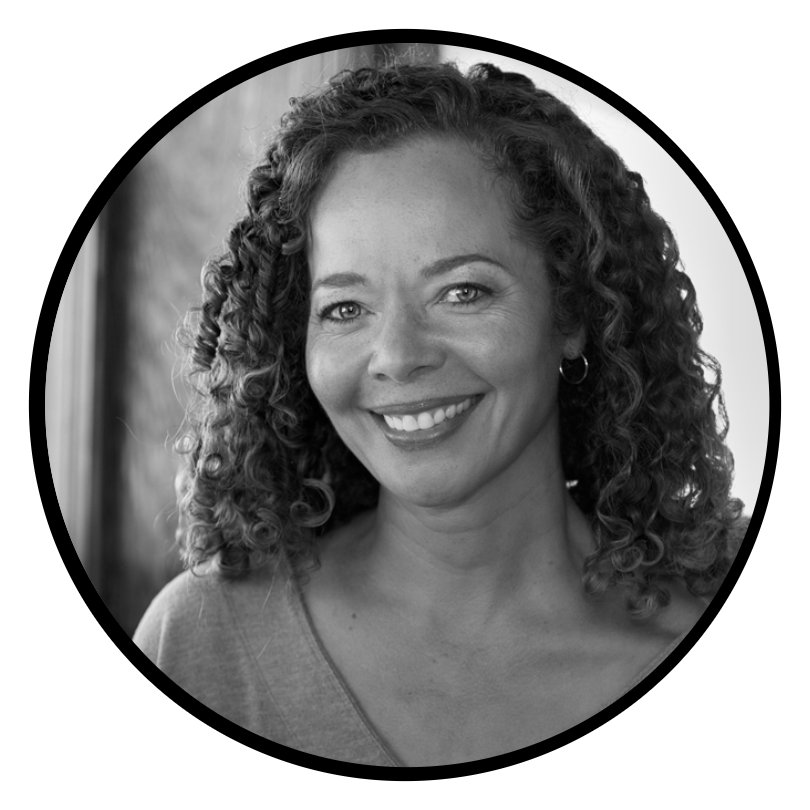
Gin Hammond, Playwright
Gin Hammond is an award-winning Harvard University/Moscow Art Theatre graduate. Gin has been awarded National Endowment for the Arts grants for multiple plays, and her book, Returning the Bones, is a National Indies Excellence Finalist and a Gold Winning INDIES Book of the Year winner. Gin has written, coached, and directed multiple shows, including Zen and the Art of an Android Beatdown and Childfinder for Book-It Repertory Theater, as well as the videogame Post-Human War.
Barbara CallandEr, historian
Barbara Callander, a Seattle-based humanities scholar and performing artist who has been researching and disseminating the history of women’s rights throughout the state of WA and the PNW for over 25 years in conjunction with the creation and presentation of lectures, dramatic biographical performances and other programs about suffrage in Washington, the Northwest, and beyond. Ms. Callander's numerous Humanities presentations over the last three decades have been awarded grants from Humanities Washington, the Washington State Historical Society and ArtsWA, among others.
Funded By
